


Your alarm rings at 6:45. By 7:10 you have answered three work messages, found one sock and promised yourself a healthy breakfast. By 9:30 you are eating a biscuit from a colleague's desk and calling it a meeting snack. Sound familiar? In 2026, the problem is rarely that you do not know what a good breakfast looks like. The problem is that a good breakfast loses to a busy morning almost every time.
This round-up is for anyone whose mornings feel like a negotiation. That includes the professional on back-to-back calls, the 40-something whose doctor said "lose some weight" at the last check-up, the person managing blood sugar or blood pressure, and the woman in perimenopause wondering why her old breakfast stopped working. These breakfast recipes for losing weight were chosen for one quality above taste or trends: they survive real life. Each one can be prepped ahead, made in under ten minutes, or put together half-asleep.

Do this first: pick one breakfast from this list and eat it five mornings in a row. Do not rotate all twelve. Repeating one meal removes the 7 am decision, and that decision is usually what pushes you towards toast and jam.
1. Paneer-stuffed moong dal chilla from a Sunday batter
Soak once, eat all week. On Sunday evening, grind soaked yellow moong dal with ginger, green chilli and a pinch of hing. The batter keeps in the fridge for three to four days. On weekday mornings, pour a ladle onto a hot tawa, crumble 50 g of paneer over one half, fold and serve with green chutney.
Moong dal gives plant protein and fibre. Paneer adds more protein, plus fat that slows digestion. That is why a chilla keeps you full until lunch better than poha alone. The bigger trick is in your head. When the batter is already in the fridge, breakfast takes four minutes and no willpower. You have moved the effort to Sunday, when you have energy to spare.
- Soak 1 cup of yellow moong dal for 4–6 hours on Sunday afternoon.
- Grind with 1 inch of ginger, 2 green chillies, salt and a little water to make a pourable batter.
- Store in a steel or glass container. It makes about 8–10 chillas.
- Each morning, add grated carrot or chopped spinach to one ladle of batter for extra volume.
- Cook on a lightly oiled tawa, fill with crumbled paneer or tofu, and fold.
2. The hung curd savoury bowl (no cooking, no eggs)
Think raita, upgraded to a meal. Take 200 g of thick hung curd and season it with salt, roasted jeera and black pepper. Top with chopped cucumber, tomato, a handful of roasted chana and a spoon of mixed seeds. It takes three minutes and needs no stove.
Most people think of curd as a side dish. When strained properly, it has enough protein to be the main meal. Roasted chana adds crunch, along with more protein and fibre. This bowl suits vegetarians who avoid eggs, people with diabetes who want fewer fast-digesting carbs, and anyone with two minutes before the cab arrives. It also tastes familiar, and that matters. A breakfast that feels strange usually gets dropped by Thursday.
3. Last night's roti, this morning's egg bhurji wrap
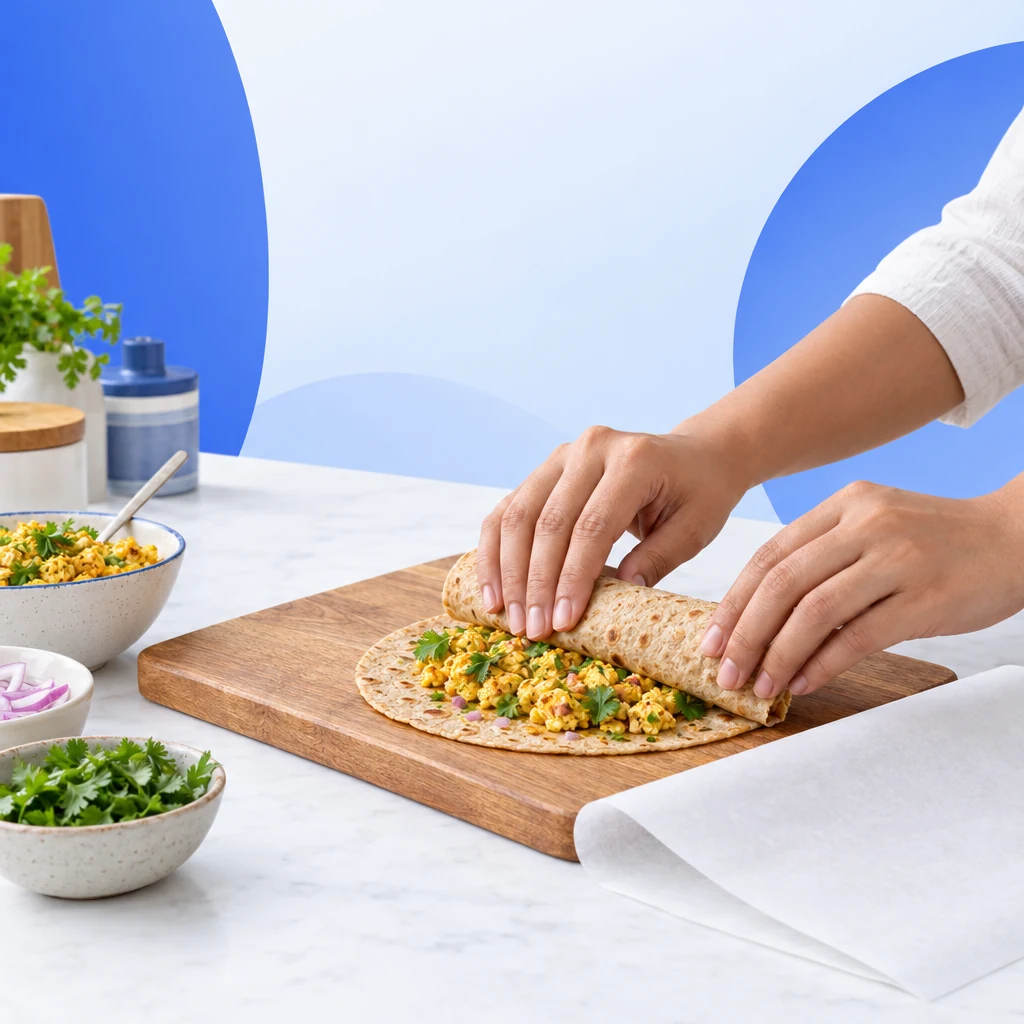
Cook dinner with breakfast in mind. Make two extra rotis at dinner. In the morning, scramble two eggs with onion, tomato, haldi and coriander. Spread a little green chutney on a roti, add the bhurji and roll it up. Wrapped in butter paper, it travels well.
This fixes the most common busy-morning problem: a breakfast that cannot leave the house. You can eat a bhurji roll in the car, at your desk or between calls. Eggs give good-quality protein. One whole-wheat roti gives enough carbohydrate to fuel your morning without a mid-morning slump. If you do not eat eggs, use paneer bhurji or crumbled firm tofu with the same masala.
Does eating breakfast really matter if you are trying to lose weight? The science is more honest than the slogans. A 2020 meta-analysis of randomised trials in Obesity found that skipping breakfast for 4 to 16 weeks led to about 0.54 kg more weight loss than eating it. So breakfast is not a magic switch. The same analysis found LDL cholesterol was 9.30 mg/dL higher in people who skipped breakfast, which matters if your doctor is already watching your lipids. Breakfast earns its place by what it prevents later in the day, and by what it does for your heart markers.
4. Batch-baked besan and vegetable muffins
Twelve breakfasts, one oven session. Mix besan, curd, grated vegetables, spices and a little baking soda into a thick batter. Pour it into a muffin tray and bake. You now have savoury bites, a cross between dhokla and muffins, that keep in the fridge for four days and reheat in 30 seconds.
Batch cooking works because it protects you from your tired future self. People who keep weight off tend to be consistent, and consistency is easier when the easy option is already healthy. In data from the National Weight Control Registry, 78% of nearly 3,000 adults who had lost at least 13 kg and kept it off for a year or more said they ate breakfast every day. Only 4% never ate it. Routine seems to be the quiet engine behind keeping weight off.
- Whisk 2 cups of besan with 1 cup of curd and enough water to make a thick batter.
- Fold in grated carrot, chopped capsicum, spinach and onion.
- Season with salt, haldi, ajwain and green chilli, then add half a teaspoon of baking soda.
- Fill a greased 12-cup muffin tray and bake at 180°C for 20–25 minutes.
- Eat two or three with a bowl of curd or a boiled egg for extra protein.
5. The bigger breakfast for evening snackers
Move calories to the morning. If your hunger peaks at 9 pm, try eating more earlier. Pair a two-egg or paneer omelette with a bowl of vegetable dalia, a piece of fruit and a glass of buttermilk. It looks like a lot of food. That is the point.
Stress eating and emotional eating often show up at night, after a day of eating too little and working too much. A filling morning meal can reduce that. According to a trial summarised by Cronometer, adults with obesity on a calorie-restricted diet lost much more weight at 32 weeks with a 600-calorie, high-protein breakfast than with a 200-calorie one. A separate randomised trial on big breakfast diets found average losses of 4.87 kg on a high-fat big breakfast and 3.87 kg on a high-protein version. Your total calories for the day still count. You are simply spending them where they help most.
If you have diabetes or hypertension, or take medicine that affects blood sugar, check big changes to meal timing or size with your doctor first. A bigger breakfast suits many people, but your plan should match your reports.
6. Overnight sattu and oats jar
Mix at night, grab at dawn. In a jar, stir 3 tablespoons of sattu and 3 tablespoons of rolled oats into 200 ml of milk or thin curd. Add a pinch of cardamom and a few chopped almonds. Close the lid and refrigerate. In the morning, top with half a chopped apple or banana and eat it cold.
Sattu, roasted chana flour, is a Bihar staple and one of India's cheapest protein sources. It also has plenty of fibre. Oats add slow-digesting carbs, and milk or curd adds more protein. The result is a breakfast that keeps you full without any cooking. Make three jars at once and you have three mornings sorted.
- Use plain sattu, not the salted drink mix.
- Skip added sugar. The fruit gives enough sweetness.
- For a savoury version, use buttermilk, salt, roasted jeera and chopped onion instead of milk and fruit.
7. Sprouts chaat with lemon and pomegranate
Sprout once, snack all week. Soak green moong overnight, drain and leave it covered for a day or two until it sprouts. Store the sprouts in the fridge. Each morning, steam a cup for two minutes, then toss with onion, tomato, cucumber, coriander, lemon juice, chaat masala and a few pomegranate seeds.
Sprouts are high in fibre and plant protein and low in calories, so a large bowl feels filling. The tangy flavour also makes it easy to stick with. Add a boiled egg or a few cubes of paneer if you need more protein to last until lunch.
8. Vegetable-loaded oats upma
Same comfort, more staying power. Dry-roast 1/2 cup of rolled oats and set aside. In a little oil, splutter mustard seeds, curry leaves and chana dal. Add onion, green chilli, carrot, beans and peas. Stir in the oats with salt and about 3/4 cup of water. Cook for three to four minutes and finish with lemon juice.
Rava upma is a common South Indian breakfast, but it digests quickly. Oats bring more fibre, and the extra vegetables add volume without many calories. Serve with a bowl of curd or a boiled egg to raise the protein. You can chop the vegetables the night before to cut the morning time in half.
9. Ragi dosa with peanut chutney
A millet breakfast with zero fermentation wait. Mix 1 cup of ragi flour with 1/4 cup of rice flour, a little curd, salt, chopped onion, green chilli and water to make a thin batter. Rest it for 10 minutes, then pour it thin on a hot tawa like a rava dosa. Serve with a small spoon of peanut chutney.
Ragi, or finger millet, is rich in fibre and calcium and is common in Karnataka homes. Its fibre helps slow digestion, which suits people watching blood sugar. Keep the peanut chutney to one or two spoons, because it is high in calories. Pair two dosas with curd or a besan-based side for extra protein.
10. Tofu or paneer scramble on toasted multigrain bread
A fast, high-protein plate. Crumble 100 g of paneer or firm tofu into a pan with a little oil, onion, tomato, capsicum, haldi, black pepper and salt. Cook for four minutes. Serve on one slice of toasted multigrain bread with a few cucumber slices on the side.
This works well for vegetarians who want the feel of an egg breakfast. Paneer gives more fat and creaminess, while tofu is lighter in calories. One slice of bread is enough. The protein does the job of keeping you full.
11. Masala egg muffins for the week
Six breakfasts, one tray. Whisk 8 eggs with salt, pepper, haldi, chopped onion, tomato, spinach, coriander and green chilli. Pour into a greased muffin tray and bake at 180°C for 15–18 minutes. Cool, store in a box in the fridge and reheat two or three in the morning.
These are like a portable omelette. You can eat them with one hand on your way out. Each egg muffin is high in protein and low in carbs, so they suit people with diabetes too. Add a piece of fruit or one roti if you need more energy for an active morning.
- Use a silicone tray or grease a steel tray well so the muffins do not stick.
- Add a little crumbled paneer for extra protein.
- They keep for up to four days in the fridge.
12. Protein smoothie with curd, banana and seeds
For mornings with no time at all. Blend 200 g of curd or 1 cup of milk, half a banana, 1 tablespoon of peanut butter, 1 tablespoon of soaked chia or flax seeds and a pinch of cinnamon. Add a scoop of protein powder if you use one. Pour it into a bottle and drink it on the go.
A smoothie is the last line of defence against the office biscuit. Curd and peanut butter give protein and fat, and the seeds add fibre. Keep the fruit to half a banana and avoid honey or sugar, as smoothies can become sugar-heavy quickly. Drinking it slowly over 10–15 minutes also helps you feel fuller.
FAQ
What is a perfect breakfast for losing weight?
A good weight loss breakfast has a solid protein source, some fibre from vegetables, dal or whole grains, and a little fat. A paneer-stuffed moong chilla, an egg bhurji roti wrap or a sprouts chaat with paneer all fit this pattern. The perfect one is the breakfast you can repeat on your busiest day.
Is skipping breakfast bad for weight loss?
It depends on your habits. A review of observational studies linked skipping breakfast with 55% higher odds of overweight or obesity. However, this shows a link, not a cause. If skipping breakfast makes you overeat at night, a planned breakfast is the better choice.
Recipes help, but sticking to them on a hectic Thursday is the hard part. If you want breakfast recipes for losing weight built around your food preferences, health reports and schedule, book a consultation call with Qubit. Our coaches will look at your routine and help you build habits that last.
Sources
- Breakfast Skipping, Body Composition, and Cardiometabolic Risk: A Systematic Review and Meta‐Analysis of Randomized Trials – Bonnet – 2020 – Obesity – Wiley Online Library – onlinelibrary.wiley.com
- Breakfast Consumption and Weight Loss – nutrition.org
- 6 mins read – cronometer.com
- Big breakfast diet composition impacts on appetite control and gut health: a randomised weight loss trial in adults with overweight or obesity – PMC – pmc.ncbi.nlm.nih.gov