


Oats have a branding problem. The packet shows a smiling woman in yoga pants. Your bowl looks like wallpaper paste that has given up on life. So you rescue it with honey, a banana, a fistful of raisins and two spoons of peanut butter, then feel proud of your light 600-calorie breakfast. By 11 am you are eyeing the office samosas anyway.
As of 2026, oats sit in almost every Indian kitchen cupboard, usually behind the Maggi. The grain is fine. The recipe is usually the problem. This guide explains what actually makes an oat meal filling, then gives you 15 oats recipes for weight loss that taste like real food, from masala overnight jars to oats idli and a dinner khichdi.
Oats recipes for weight loss are meals built on a measured portion of oats, plus protein, high-volume vegetables or fruit and very little added sugar, so they keep you full on fewer calories. They matter most to busy adults, people managing blood sugar, blood pressure or cholesterol, and anyone who starts snacking before lunch.
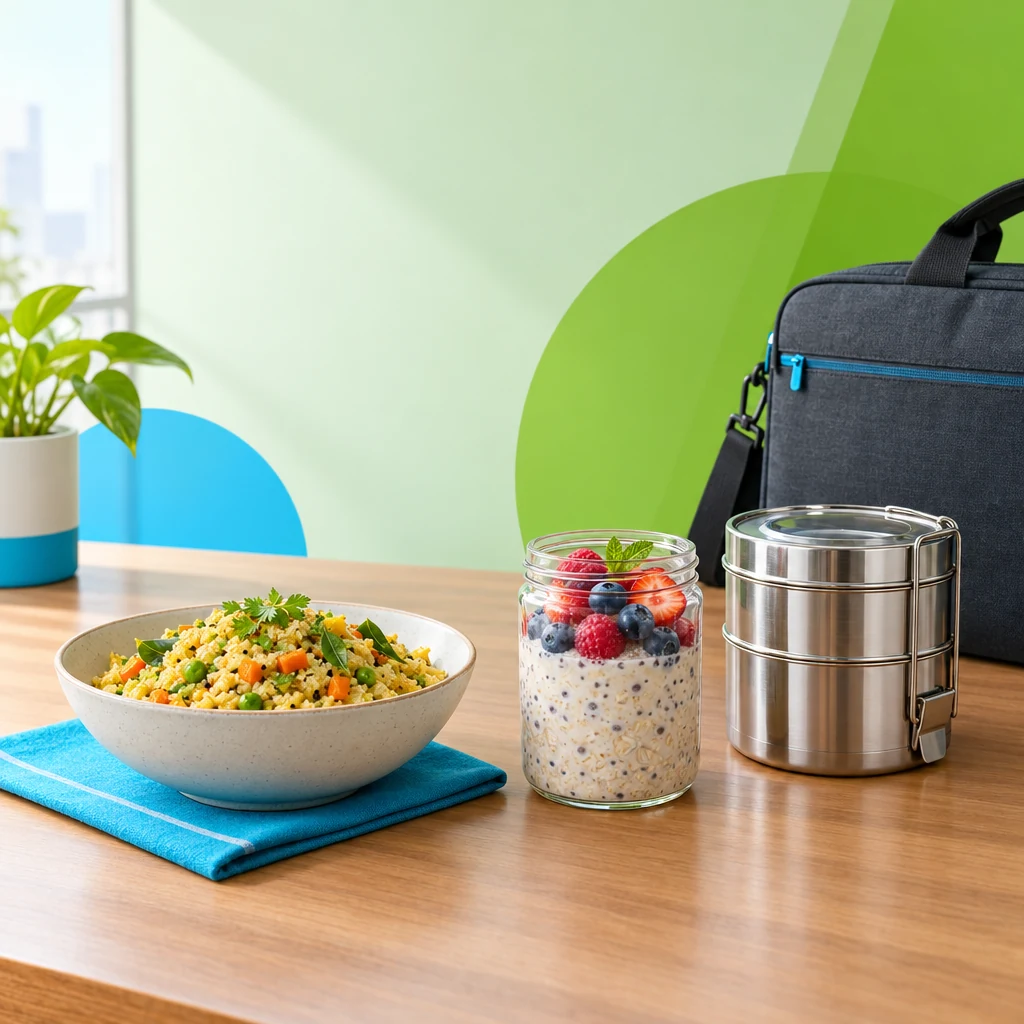
Why oats fill some people up and leave others starving by 11
Oats fill you up because of beta-glucan, a soluble fibre that turns into a thick gel in your gut. That gel slows digestion and keeps sugar entering your blood at a gentler pace. So why does your bowl fail you? Usually it is everything around the oats. A plain bowl of oats cooked in water is low in protein, so hunger returns fast. Flavoured instant sachets add sugar. Toppings like honey, dates and nut butter add calories quicker than you can count them. The grain does its job. The recipe sabotages it. Fix the recipe, and the same 40 g of oats behaves like a completely different breakfast.
- The type of oats: rolled and steel-cut digest slower than instant or flavoured sachets.
- Protein in the bowl: curd, milk, paneer, eggs, whey or dal stretch fullness by hours.
- Volume: vegetables or fruit add bulk for very few calories.
- Added sugar: honey, jaggery and syrups quickly erase the calorie advantage.
- Fat portion: one spoon of nuts or seeds helps, three spoons becomes a second meal.
- Texture: a bowl you chew slowly registers as more food than one you drink.
The four-part bowl: how a weight-loss oat recipe is built
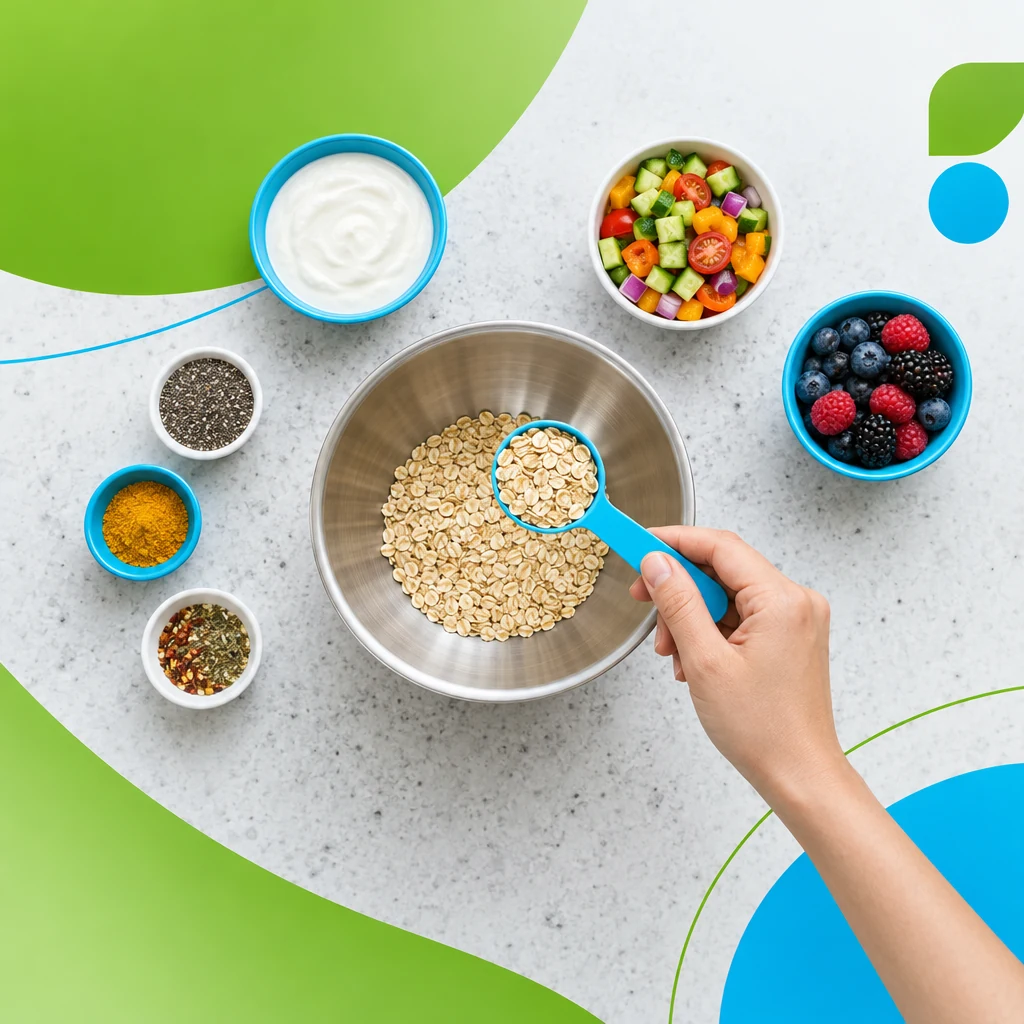
Every good weight-loss oat recipe has four parts: a measured oat base, a protein anchor, a volume booster and flavour that does not come from sugar. Start with 30–40 g of rolled or steel-cut oats, which is roughly 4–5 level tablespoons. Add a protein source that gets the meal to around 20 g of protein. Then pile on vegetables or fruit for bulk, because a big bowl tells your brain you ate properly. Finally, season with spices, cocoa, cinnamon, lemon, herbs or a little salt. This is a coach's formula, not a chef's. It works because you can swap any part on a lazy Tuesday and the meal still keeps you full. Measure the oats and nut toppings for the first two weeks. After that, your eyes learn the portion and the spoon becomes optional.
The table shows that protein and volume do most of the work, while the oats themselves stay a small, fixed portion.
| Part | Good options | What it does |
|---|---|---|
| Oat base | Rolled or steel-cut oats, 30–40 g | Beta-glucan for steady fullness |
| Protein anchor | Curd, milk, paneer, eggs, whey, sprouts | Keeps hunger away for hours |
| Volume booster | Vegetables, berries, apple, papaya | Bigger bowl, few extra calories |
| Flavour | Cinnamon, cocoa, jeera, curry leaves, lemon | Taste without added sugar |
15 oats recipes for weight loss for real Indian mornings
These 15 oats recipes for weight loss are sorted by the kind of day you actually have, not by how pretty they look on a plate. The overnight jars suit people who leave home before 8 and refuse to cook at 6 am. The savoury ones suit anyone who grew up on upma and poha and finds sweet porridge faintly insulting. The last group moves oats out of breakfast entirely, which matters if your weak spot is the 5 pm hunger crash or a late dinner after a long commute. Each recipe follows the four-part bowl, so the protein and volume are already built in. Pick two or three you like and rotate them. Variety is good, but a short list you repeat is easier to stick with than 15 recipes you admire and never make.
Overnight jars for people who leave before 8
- Masala chaas overnight oats: 35 g oats soaked in thick curd thinned with water, roasted jeera, grated cucumber, mint and salt. Savoury, cooling and ready by morning.
- Apple cinnamon protein jar: 35 g oats, 150 ml milk, one scoop of whey or 100 g hung curd, half a grated apple and cinnamon. Tastes like dessert, eats like a meal.
- Chocolate banana jar: oats, milk, curd, one teaspoon of cocoa and half a small banana. The cocoa removes the urge to add sugar.
- Mango lassi oats (in season): oats soaked in curd with 60 g chopped mango and a pinch of cardamom. Keep mango to a small handful.
- Berry chia jar: 30 g oats, one teaspoon of chia, milk, curd and frozen berries. The chia thickens it overnight into pudding.
Savoury Indian oats for people who hate sweet breakfasts
- Vegetable oats upma: dry-roast oats, temper with mustard seeds and curry leaves, add onion, carrot, beans and peas, then steam with water. Serve with curd or two boiled eggs.
- Oats moong chilla: blend soaked moong dal with oats, ginger and green chilli, then spread thin on a non-stick tawa. Stuff with crumbled paneer.
- Oats idli: roasted oats, semolina-free curd batter, grated carrot and a short rest before steaming. Pairs well with sambar for extra protein.
- Egg oats bhurji: scramble two eggs with onion, tomato and haldi, then fold in 25 g cooked oats. Fast, filling and good after a gym session.
- Oats poha-style: steam rolled oats briefly, season like poha with peanuts kept to one spoon, lots of onion, coriander and lemon.
Oats beyond breakfast: snacks, lunch and dinner
- Oats vegetable khichdi: half oats, half moong dal, plenty of vegetables, cooked soft in a pressure cooker. Easy on digestion for a late dinner.
- Oats tikki: mashed boiled chana or rajma bound with oats, onion and spices, pan-cooked with a teaspoon of oil. A tiffin-friendly evening snack.
- Savoury oats soup: tomato and vegetable broth thickened with a few spoons of oats and topped with shredded chicken or tofu.
- Oats curd rice style: cooked oats mixed with curd, tempered with mustard and curry leaves, and grated carrot. Cooling lunch for hot Chennai afternoons.
- Two-ingredient oat cookies: mashed ripe banana and oats baked with cinnamon. Eat two, not the tray, and pair with a glass of milk.
Oats with diabetes, high BP, high cholesterol or menopause
Oats are one of the few foods with solid trial evidence for lifestyle diseases, as long as the portion and sugar stay sensible. For cholesterol, the recommended intake is 3 g of oat beta-glucan per day. For blood pressure, 8 g a day of oat bran soluble fibre over 12 weeks lowered both systolic and diastolic pressure in people with mildly raised readings. For type 2 diabetes, a 5 g serving of oat beta-glucan can improve glycaemic control. One bowl will not reach these doses alone, which is why oats work best next to dal, vegetables and other fibre sources, like the ones in 6 High-Fibre Indian Food Swaps.
Sugar matters more than oats For diabetes, the jaggery, honey and banana around the oats move your glucose more than the oats do. Savoury recipes with eggs or paneer are the safer default.
Menopause needs more protein Women in menopause lose muscle faster, so the protein anchor is non-negotiable. Pair oats with curd, paneer or eggs and keep strength training in the week.
Go slow with fibre If you rarely eat fibre, a sudden big bowl of oats plus chia can bloat you. Start with 25–30 g and drink more water.
On diabetes or blood pressure medication? Tell your doctor before changing breakfast dramatically. If you own a glucometer, check your sugar two hours after a new oat recipe to see how your body responds.
FAQ
The short answer to most oat questions is that the grain itself is reliable and the preparation decides the result. Oats help weight loss by making a calorie deficit easier to hold, because the beta-glucan keeps you fuller for longer. They support cholesterol, blood pressure and blood sugar in controlled trials when the daily dose is high enough and sugar stays low. The type of oats changes texture and digestion speed more than it changes nutrition, so the best oats are the ones you will actually eat on a rushed Wednesday. Rolled oats are the practical choice for most busy people. Steel-cut oats suit those who batch-cook on Sundays. Instant flavoured sachets are the ones to skip. The answers below cover the questions people raise most often about oats and weight loss.
Does eating oats reduce belly fat?
No food burns fat from one spot. Belly fat drops with an overall calorie deficit, enough sleep, lower stress and strength training, and oats simply make that deficit easier because they keep you full.
Can you use regular oats for overnight oats?
Yes. Regular rolled oats are the best choice for overnight oats because they soften into a creamy texture in 6–8 hours. Steel-cut oats stay chewy, and instant oats turn mushy.
Are overnight oats good for diabetics?
They can be, if you keep the portion to 30–40 g and add protein like curd or whey instead of honey or lots of fruit. Check your own glucose response, because individual reactions vary.
Are steel-cut oats better than rolled oats?
Steel-cut oats digest a little slower, which may help blood sugar slightly. Nutritionally they are very close to rolled oats, so choose whichever you will eat consistently.
Got the recipes but still struggle to stay consistent past week two? Book a consultation call with Qubit. We will build oats and your regional favourites into a flexible plan around your work hours, health reports and stress levels.