


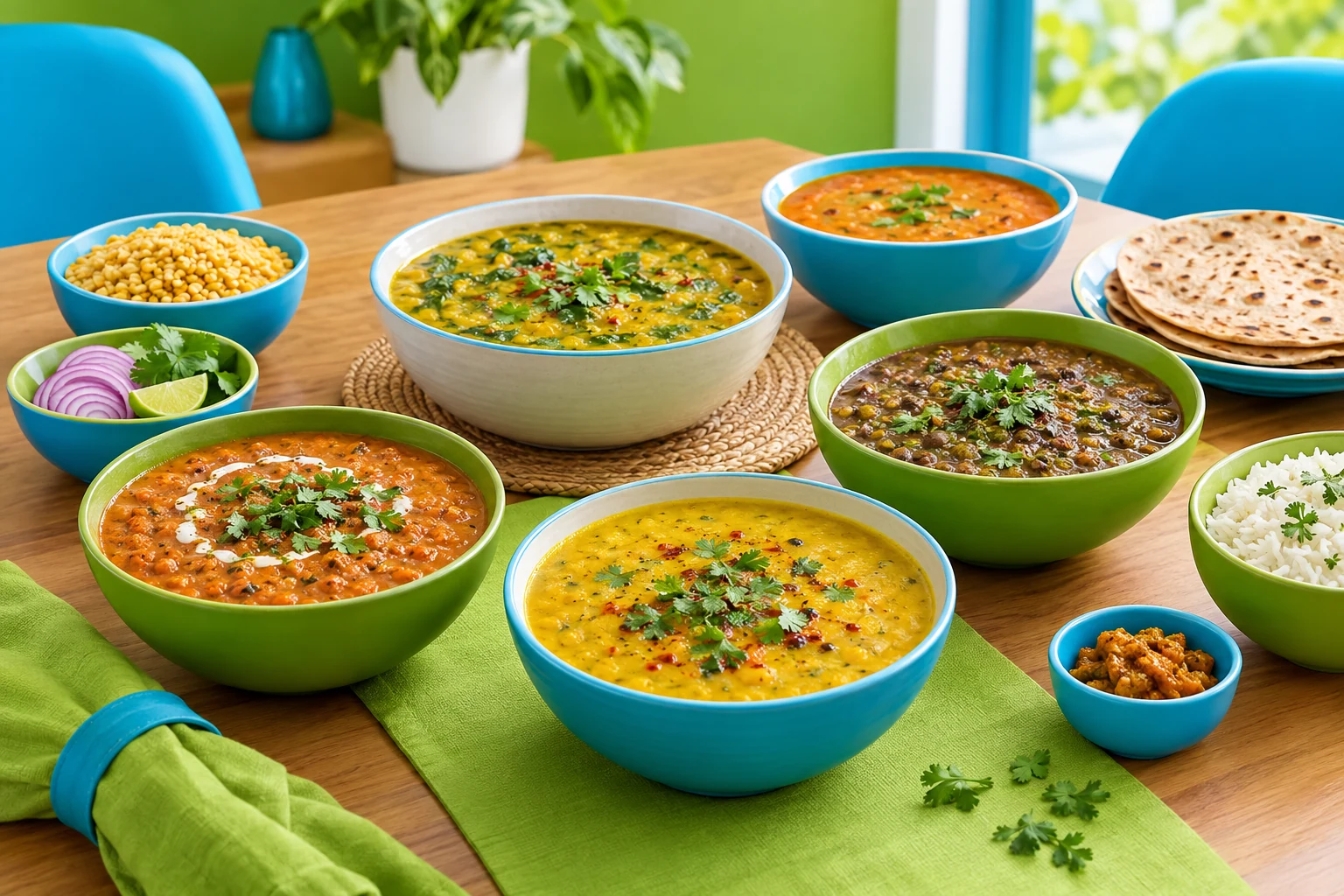
There is a bowl of yellow liquid in your kitchen that has survived every diet trend India has thrown at it. Keto came and told you to fear it. Juice cleanses ignored it. A relative at a wedding once told you dal "causes gas and makes you fat" while serving herself a third gulab jamun. And yet, every evening, dal is still there, sitting next to the rice, outliving all of them.
I coach busy professionals, people sent to me by their physician, people who have lost the same 8 kilos three times, and women working through menopause. Almost all of them eat dal most days. Very few of them know what it is doing for them, or what it isn't doing. Some treat it as their main protein when it is mostly water. Others drown a healthy bowl in an oily tadka the size of a small lake and wonder why the scale won't move. This guide is my attempt to fix that, with the science kept plain and the advice kept practical.
Dal is the Indian word for dried split pulses (lentils, beans and peas with the outer skin often removed) and for the cooked dish made from them. It matters to anyone trying to lose fat, manage blood sugar or blood pressure, or eat well after 35, because it is one of the cheapest sources of plant protein, fibre and iron in the Indian diet.
Key takeaways
- Cooked dal is a useful protein and fibre source, but a normal katori gives far less protein than most people assume because cooked dal is mostly water.
- Toor, moong, masoor, chana and urad differ in texture, digestion and how they fit a meal, and no single dal is best for everyone.
- Dal eaten with rice forms a complete protein, so dal-chawal is a nutritionally sound pairing when the portions are sensible.
- Most of the calorie difference between a light dal and a heavy one comes from the ghee, oil and cream added during cooking.
- People with diabetes, hypertension, menopause or kidney concerns can usually keep dal in their diet, with adjustments to portion, thickness and the dal they pick.
What dal is, beyond the yellow bowl
Dal starts life as a seed. Lentils, pigeon peas, chickpeas, mung beans and black gram are all legumes: plants that grow seeds in pods. When those seeds are dried, the husk is removed and the seed is split into halves, you get dal. The same word then gets used for the soupy, spiced dish you eat with rice or roti. So when your mother says "make dal," she means the dish, and when the kirana shop owner says "which dal?" he means the raw ingredient.
That splitting step matters more than it sounds. A whole green moong takes long to cook and keeps more fibre in its skin. Split, skinned yellow moong dal cooks in minutes and digests more easily, but loses some of that fibre. Every dal in your pantry sits somewhere on this line between whole and polished, and that position decides how fast it cooks, how filling it is and how kind it is to your gut.
Dal is also woven into how India eats and spends. Toor (arhar) dal alone carries a weight of 0.796 percent in India's consumer inflation calculation, which puts it behind only milk, rice, wheat, fish and prawns, chicken, sugar, potatoes and tea among individual food items. India also produces 63% of the world's toor dal. When something is eaten that widely, its quirks shape the health of a lot of people, so it is worth understanding what is actually in the bowl.
What is inside a bowl of dal, and the water problem
Cooked dal gives you protein, fibre, iron and slow-digesting carbohydrates, but in smaller amounts per spoon than the label on the dry packet suggests. Cooked lentils contain about 9g of protein, 8g of fibre and roughly 3.3mg of iron per 100g. That is a decent profile for something that costs a fraction of paneer or chicken.
Here is the twist most people miss, and I see it in food logs every week. The dry dal figures you read online look huge. Masoor dal, for example, contains 25.1 grams of protein and 7.6 mg of iron per 100 grams as a raw ingredient. Then you cook it, it soaks up water and swells, and the same 100 grams of finished dal holds a much smaller share. A thin, watery restaurant dal is diluted further still. So when a client tells me "I eat dal twice a day, I get plenty of protein," my first question is always: how thick is it, and how much of the bowl is actually dal?
A quick reality check helps. If your katori holds around 150g of cooked dal at the roughly 9g of protein per 100g that cooked lentils provide, you are getting somewhere near 13g of protein. Useful, yes. Enough to carry a whole meal for someone trying to keep muscle while losing fat? Usually not on its own.
The fibre is the hidden hero. Most adults in Indian cities eat far less fibre than they should, because white rice, maida and packaged snacks crowd it out. The fibre in dal slows how fast food leaves your stomach, keeps you fuller for longer and feeds the bacteria in your gut. For someone fighting evening snack cravings, that slower digestion is worth more than a few extra grams of protein.
The iron needs a helper. Plant iron is harder for the body to absorb than the iron in meat. Vitamin C improves absorption, which is why the old habit of squeezing lemon over dal, or eating it with a tomato-heavy sabzi, is good science dressed up as tradition. Drinking tea right with the meal works against you, since compounds in tea reduce iron uptake. Have your chai an hour later instead.
Why dal-chawal works as a protein pair
Dal and rice together make a complete protein. Proteins are built from amino acids, and your body needs nine of them from food. Lentils run short on one called methionine, and rice runs short on lysine. Eaten together, rice provides the methionine lentils lack and lentils provide the lysine rice lacks, so the pair covers each other's gaps. Roti with dal works on the same principle, since wheat is also low in lysine.
So dal-chawal is not the villain of your diet. The problem I see is proportion. A plate that is three-quarters rice with a few spoons of dal poured over it is a carbohydrate meal with a protein garnish. Flip the ratio towards more dal and a smaller mound of rice, add a vegetable, and the same comfort food turns into a balanced plate.
Meet the five dals in most Indian kitchens
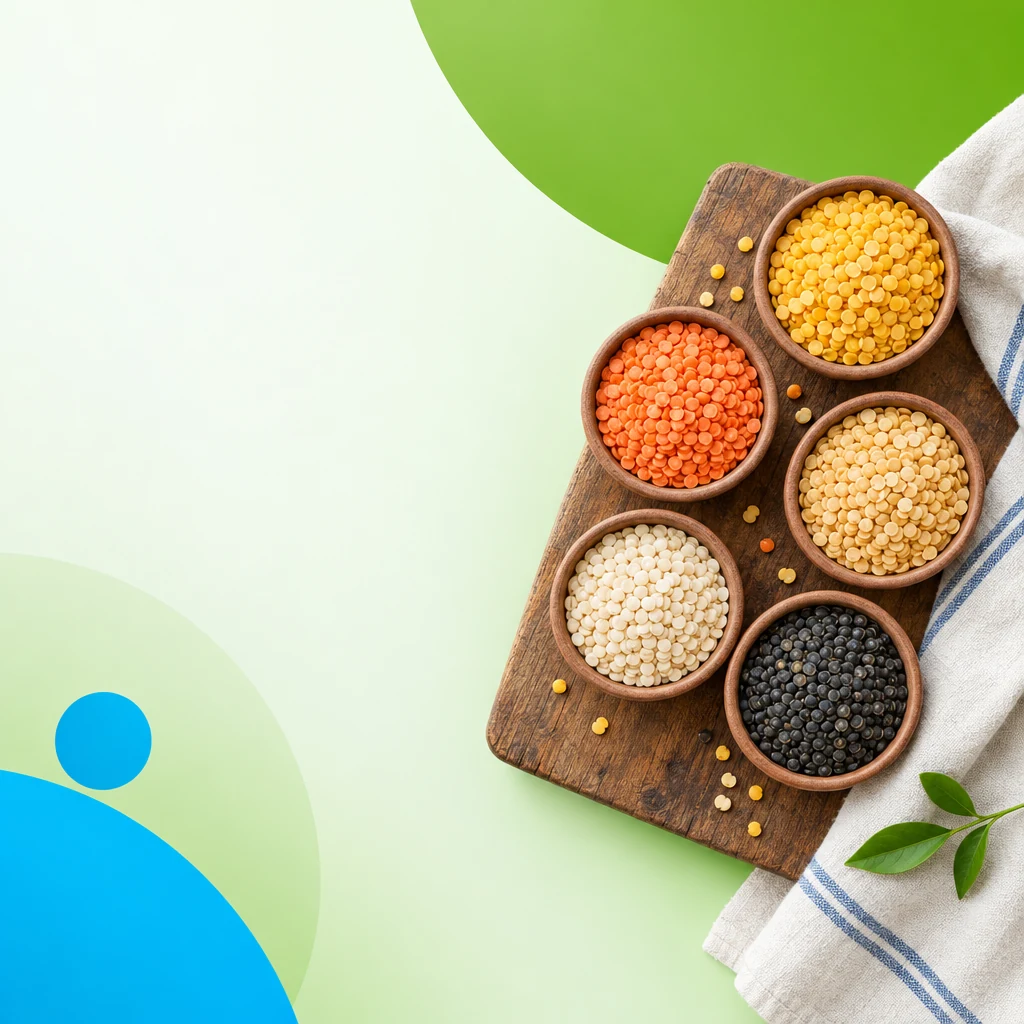
No single dal wins on every count, so the best choice depends on your gut, your meal and your goal. The table below compares the five most common ones on the points that matter for a weight-conscious adult. Only masoor carries numbers here, because that is the dal my sources give specific raw figures for; the rest are described in words.
| Dal | Comes from | Cooked texture | Digestion | Good fit for |
|---|---|---|---|---|
| Toor (arhar) | Split pigeon pea | Smooth, slightly thick | Moderate | Sambar, everyday dal-chawal |
| Moong (yellow) | Split, skinned mung bean | Soft, quick to break down | Easiest of the five | Khichdi, sensitive stomachs, recovery |
| Masoor (red) | Split red lentil | Creamy, cooks fast | Fairly easy | Quick weeknight dal; 25.1g protein and 7.6mg iron per 100g raw |
| Chana | Split, skinned chickpea | Firm, holds shape | Slower, can cause bloating | Thick dals, snacks, fullness |
| Urad (white or black) | Split black gram | Sticky, rich | Heaviest | Idli, dosa batter, dal makhani |
Toor dal
Toor is the default dal of South and West India, the backbone of sambar and the Gujarati sweet-sour dal. It is reliable, filling and pairs well with rice. It is also sensitive to price: when toor production fell from 42.20 lakh tonnes in 2021-22 to 34.30 lakh tonnes in 2022-23, prices climbed, and a LocalCircles survey found 27% of households had reduced their toor dal consumption, 5% had stopped and 8% had switched to cheaper produce. My coaching take from that episode: when one dal gets expensive, rotate. Masoor and moong do the same job in most meals, and variety is good for your gut anyway.
Moong dal
Yellow moong is the dal people reach for when they feel unwell, and there is a reason. It breaks down quickly and tends to cause the least gas, which makes it a friendly option for anyone with a touchy stomach, older adults, or someone eating light after a long flight. Whole green moong, sprouted, is a different animal: crunchier, higher in fibre and a brilliant base for a protein-rich chaat. If you only eat moong as soupy khichdi, you are using a fraction of what it can do. Moong chilla (a savoury pancake from soaked, ground dal) is one of the easiest high-protein breakfasts I suggest to busy clients.
Masoor dal
Masoor is the busy professional's dal. Red split lentils need no soaking and turn creamy in about the time it takes to answer three work emails. Raw masoor contains 25.1 grams of protein and 7.6 mg of iron per 100 grams, one of the higher iron levels among dals. That iron content makes it a smart regular for women, especially those with heavy periods or in the years around menopause when energy dips are common. Pair it with lemon and you get more of that iron into your blood.
Chana dal
Chana dal is split, skinned chickpea, and it is the firmest of the five. It holds its shape after cooking, which is why it shows up in thick dals, in lauki chana, and roasted as a crunchy snack. That firmness means slower digestion, which can be great for fullness and blood sugar but rough on a gut that bloats easily. Soaking it for a few hours before cooking helps a lot. I like chana dal for clients who get hungry an hour after lunch, because a bowl of it tends to keep them steady until evening.
Urad dal
Urad is the reason idli and dosa exist. Its sticky texture helps batter ferment and rise, and fermentation makes it easier to digest. It is also the base of dal makhani, which is where things go sideways for weight loss, because restaurant dal makhani is often cooked with generous butter and cream. Urad itself is nutritious. The dish built on top of it decides whether it is a healthy meal or a dessert pretending to be a curry. People with gout are sometimes advised to go easy on urad and other heavier pulses, so that is a question for your doctor if it applies to you.
How dal helps fat loss, and where it quietly hurts
Dal helps fat loss because it is filling for its calories. Protein and fibre both increase fullness, so a thick bowl of dal before your rice tends to make you eat less of everything else. Fat loss still comes down to eating a little less energy than you burn over weeks, and dal makes that easier by turning down the hunger dial.
Where it hurts is almost never the dal. It is what we pour on top. A tadka with a teaspoon of ghee is flavour. A tadka with four tablespoons of oil because "that's how restaurant dal tastes" is a few hundred extra calories that do nothing for fullness. Here are the usual places a healthy bowl turns into a heavy one:
- The tadka: oil or ghee added once during cooking and then again as a finishing pour.
- Cream and butter in dal makhani, dal tadka at restaurants and many hotel buffets.
- Extra ghee drizzled at the table out of habit, sometimes by a loving family member who will not take no for an answer.
- The rice or roti portion that grows because the dal is tasty and you keep "finishing" each one.
- Fried accompaniments like papad, pakoras and pickles in oil, which add up fast.
My original observation from years of reading client food logs: people underestimate dal's protein and overestimate how light it is. They treat it as a protein dish and a diet dish at the same time, and it can be either depending on how it is cooked. The fix is simple. Make it thicker and less oily, then decide what else needs to sit on the plate.
Building a high-protein dal. If you want dal to carry more of your protein, there are easy upgrades. Cook it thicker with less water. Mix in a handful of soya chunks or crumbled paneer. Stir a spoon of hung curd into a cooled dal for a raita-like side. Add spinach or methi for volume and micronutrients without many calories. Even a western-style high-protein lentil dahl is just a thick masoor dal with more vegetables and a protein add-in, so you already know how to make it.
How does dal compare with the other protein options a vegetarian has? Soya chunks give much more protein per spoon than dal but very little fibre and a texture many people tire of. Paneer is rich in protein and calcium but much higher in fat, so a 200g serving can eat a big slice of your daily calories. Dal sits in the middle: less protein dense than either, but cheaper, higher in fibre and easier to eat every single day. In my experience, the vegetarian clients who lose fat most steadily use all three, with dal as the daily base and soya, paneer, curd or eggs filling the protein gap.
If you are trying to lose fat, think of dal as your fibre-rich base and partial protein, then add one more protein source to the meal. Relying on a thin katori of dal as your only protein is the most common reason I see vegetarian clients lose muscle and feel hungry while dieting.
Dal with diabetes, high blood pressure, menopause or after 60
For most people with lifestyle conditions, dal is one of the foods worth eating more of. The details change by condition, though, and anyone on medication or with kidney disease should check their plan with their doctor. Here is how I think about it as a coach working alongside those doctors.
Diabetes and prediabetes. The fibre and protein in dal slow the rise in blood sugar after a meal compared with rice or roti eaten alone. Thicker dals like chana, and whole pulses with the skin on, tend to digest slower still. The biggest lever is the plate: more dal and vegetables, less rice. A useful habit for clients wearing a glucose monitor is to eat a few spoons of dal and some sabzi first and the rice last. Many notice a gentler curve, though responses vary from person to person.
High blood pressure. Pulses are naturally low in sodium and contain potassium, which helps balance the effects of salt. The catch is that we add salt freely to dal, plus salty pickles and papad on the side. Taste your dal before salting at the table, lean on lemon, jeera, garlic and fresh coriander for flavour, and keep packaged dal mixes occasional, since they are often salty.
Menopause. During and after menopause, many women lose muscle faster, store more fat around the waist and feel low on energy. Iron-rich masoor, protein-boosted dals and enough total protein across the day all help, alongside strength training. Dal is also kind to the budget and easy to cook in batches, which matters when hot flushes and poor sleep leave little energy for elaborate meals.
After 60. Older adults often eat less overall and struggle to get enough protein to protect their muscles. Soft, well-cooked moong or masoor dal is easy to chew and digest, so it can be a gentle way to raise protein. Making it a little thicker, or stirring in curd or paneer, helps more. If kidney function is reduced, potassium and protein limits may apply, so that plan should come from the treating doctor.
Bloating is the complaint I hear most from people who start eating more dal. Pulses contain carbohydrates that gut bacteria ferment, which produces gas. The fixes are old and they work: soak dals like chana and urad before cooking, cook them fully, use hing (asafoetida), ginger and jeera in the tadka, and increase portions slowly over a couple of weeks so your gut adapts. Most people find the bloating settles once their body gets used to the extra fibre.
What I want you to take away is that dal is a tool, and tools work best when you know their limits. It will not fix a diet that is mostly biscuits and late-night takeaway. It will make a decent diet easier to stick to, cheaper to run and kinder to your blood sugar and gut. That is exactly the kind of small, repeatable win that adds up to a real change over a year. Vivek Thiruvengadam founded Qubit Fitness in 2021, and the coaching has since worked with 1000+ clients across India, the US, the UK, Australia and the Middle East, many of them building their meals around the same humble katori you have at home.
So the next time someone at a wedding tells you dal makes you fat, smile, nod, and maybe point out that it was the gulab jamun. Then go home and make a thick masoor dal with lemon. Your gut, your blood sugar and your waistline will all approve. (There it is again. Some words just fit.)
Want help turning dal-chawal and your other everyday Indian meals into a plan that actually fits your work, health reports and family dinners? Qubit offers 1-on-1 health and fitness coaching with personalised nutrition and progressive workouts. Book a discovery call with Qubit to get started, or get weekly myth-busting and practical tips every Friday in the free Qubit newsletter.
Sources
- Lentils Dal: Nutrition, Protein, and Why Dal-Chawal Actually Works – healthnutrihub.com
- Complete Dal Guide: Types, Benefits and Cooking Tips for Every Indian Lentil and Pulse – ulamart.com
- Tur-nomics: Prices of India’s favourite dal heat up » CEDA – ceda.ashoka.edu.in
- Exploring The Dynamics Of Toor Dal Trade In India – Bijak Blog – blog.bijak.in
- 4 in 10 households already feeling pinch of rising Tur Dal prices – localcircles.com
Related: Why Does Urad Dal Feel So Heavy, and Can It Still Help You Lose Fat?
Related: Thick or Thin? Yellow or Green? What Is Really Inside Your Moong Dal Bowl?